
The Kerning™

The space between strategy and people is where change actually happens.

The Kerning™ is our five-stage approach to culture and change—designed to close the space between what an organization intends and what people experience.

Listen
Frame
Co-design
Pilot
Embed

Because change works differently when people can see themselves in it.

01 / The Kern Table method

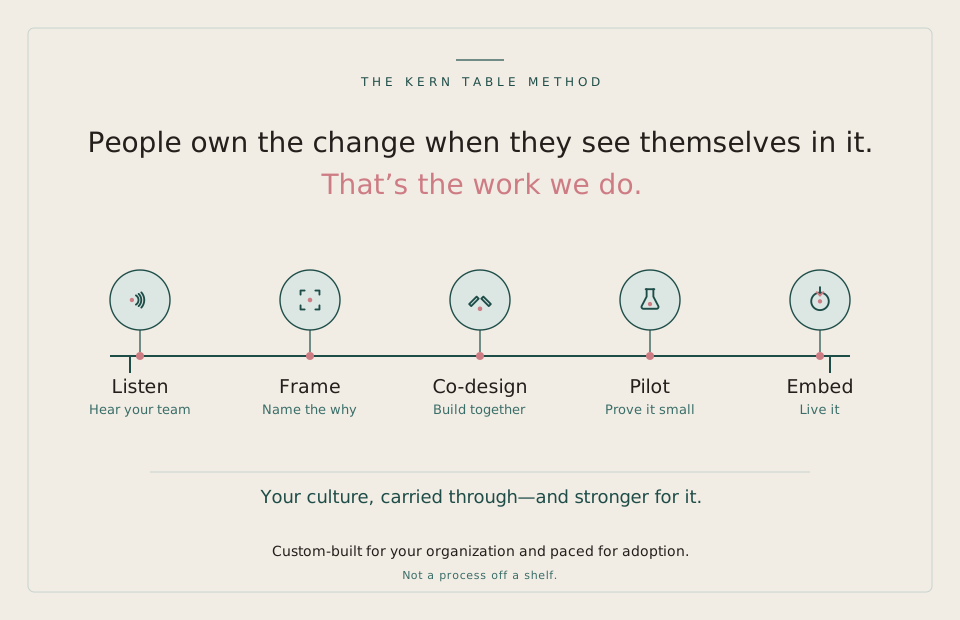
The Kern Table Method.

The Kern Table Method: Listen, Frame, Co-design, Pilot, and Embed connected as one continuous process

02 / The five stages

01Listen

Hear what’s really happening.

We listen to the people closest to the work—through conversations, research, observation, and a focused look at the organization’s communications and culture.

We seek the insight that helps make change work in practice.

02Frame

Get clear on what will make the change work.

We bring perspectives together to clarify the challenge, the why, and what people will need to move forward.

Shared understanding creates a stronger starting point.

03Co-design

Build the way forward together.

We turn insight into practical solutions—from narratives and communication plans to playbooks, roadmaps, processes, and custom-built tools.

Designed around your organization. Built with the people who make it work.

04Pilot

Prove it small.

We test ideas in the real world, learn what works, and refine before scaling. We use those insights to refine the solution, reduce unnecessary risk, remove roadblocks, and build confidence through evidence rather than assumption.

Small experiments clarify decisions and build momentum.

05Embed

Make the change part of how you work.

We help translate what works into the leadership practices, manager support, communications, listening, and everyday systems that sustain it.

When people understand change, it becomes part of the culture.

03 / Change people can carry

Change people can carry.

People own change when they can see themselves in it.

That's why we bring the people closest to the work into the process—not to question the strategic direction, but to help make it work in the real world.

04 / Where it leads

The result is strategy people can actually live.

When strategy, culture, communication, and everyday work make sense together, change becomes something the organization can trust and carry—not just something it announces.

05 / The next conversation

Let's talk about your next big change.

Let's talk!