04 / Work
Clarity people can live.
01 / Small art gallery / Case study
When Everyone Owns It, Sometimes No One Owns It
The Challenge
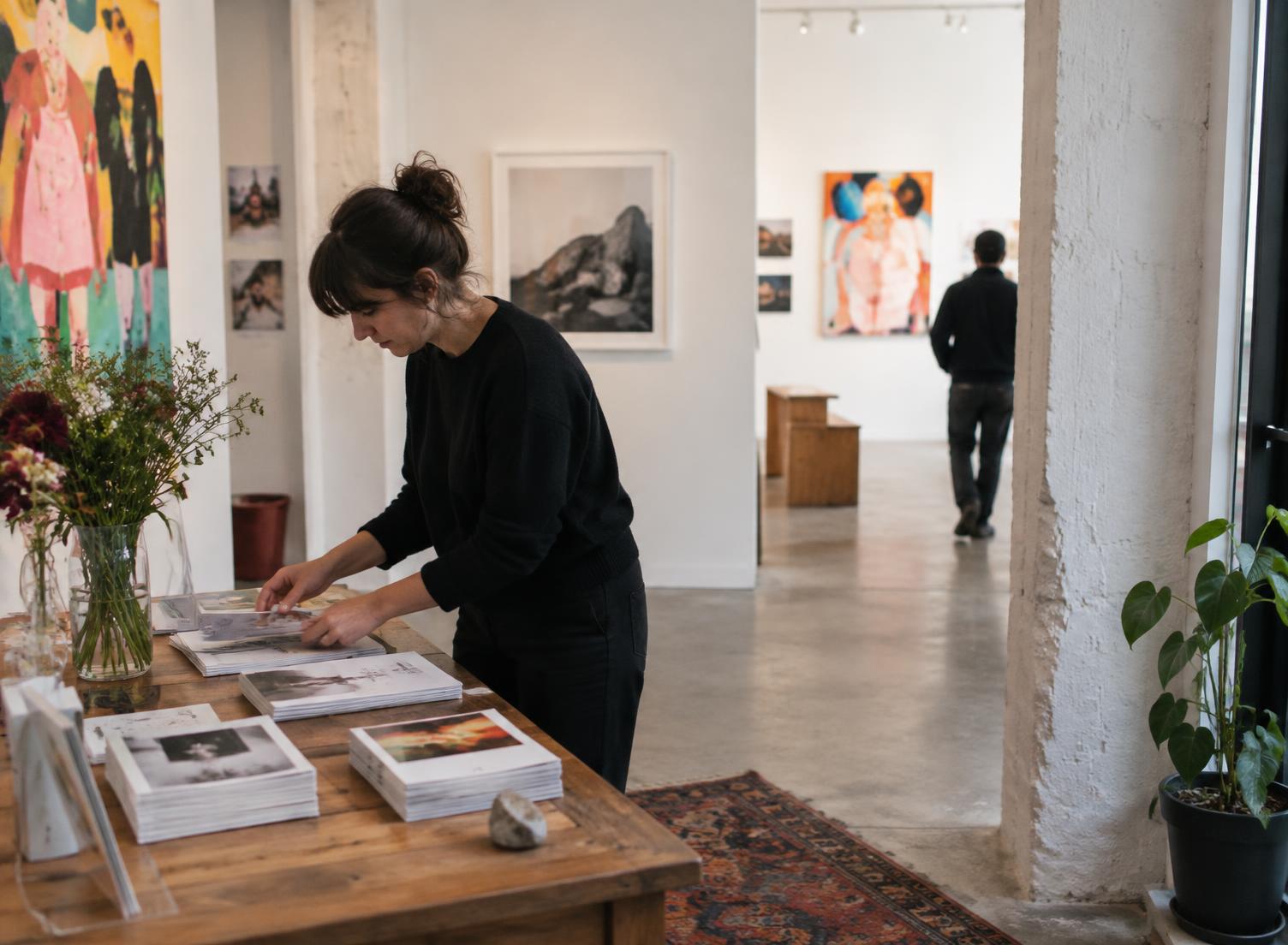
At an art gallery, everyone was doing a little bit of everything.
The team was committed, collaborative, and willing to pitch in—but with multiple part-time employees sharing responsibilities, ownership wasn't always clear. Information moved in different directions. Communications overlapped. Artists and customers weren't always sure where to find answers or when they'd hear about what was coming next.
Good people were working hard inside a system that wasn't giving them enough clarity.
The Approach
We created a practical communications and operations playbook that gave the team a shared framework for working together.
It clarified responsibilities, created a more consistent flow of information, and connected the gallery's website, email, and social channels so they worked as one communication ecosystem.
The goal was simple:
Make it easier for the team to know what to do—and easier for everyone else to know what to expect.
What Changed
The gallery saw an immediate increase in sales and event attendance.
But the bigger shift was consistency.
Customers knew where to find information. Artists received clearer communication. The team had a shared reference point for what needed to happen and how the pieces fit together.
Less guessing. Less duplication. More clarity.
And when people have clarity, they have more capacity to focus on the work that matters.
The Kern Table Takeaway
You don't always need more people, more technology, or more process.
Sometimes you need a better way for the people you already have to work together.
That's where culture, change, and engagement meet.
02 / Global NGO / Case study
Clarity That Holds
How a global organization’s content team adapted when funding cuts hit

The Challenge
At a global NGO working in 120 countries, private and government fundraising content ran on separate tracks. Programs were designed around large U.S. government grants, with private funding in a secondary role. Government grant writing was outsourced to contractors who also wrote for competing NGOs, putting a distinct message, brand value, and institutional knowledge at risk.
The Approach
Kern Table co-founder Carol Meyer built a unified 13-person content team around one purpose: align content, messaging, and offers. With Operations and the government bid lead, she led a market analysis to ground program design in what donors would fund. Team members built shared resource libraries, redesigned templates, and began exploring AI.
What Changed
Six months after the team was fully staffed, U.S. foreign aid cuts reduced it to three. Carol redefined the remaining roles, and the knowledge manager pivoted to also lead AI exploration. Using the team's libraries, they built custom GPTs to tailor content to audiences like principal gift donors and check reports against donor commitments.
- All 400+ grant reports delivered on time
- Emergency proposal and fact-checking time cut roughly in half
- Fundraising support began within hours of the funding cancellations
- Market analysis informed early thinking on signature programs
“The staffing cuts changed how we worked almost overnight, but Carol’s leadership gave us a clear path forward. With fewer people, we leaned on AI, our shared resource libraries, and one another to meet every deadline and sustain strong results. Her vision for aligned content and messaging helped us stay focused, connected, and confident in our purpose through a period of dramatic change.”
The Kern Table Takeaway
Make the vision clear, and people find their place in it, even when the ground shifts.